Evolution: The Evidence and the Mechanisms
A clear, evidence-based course on how evolution works and why it is central to modern biology
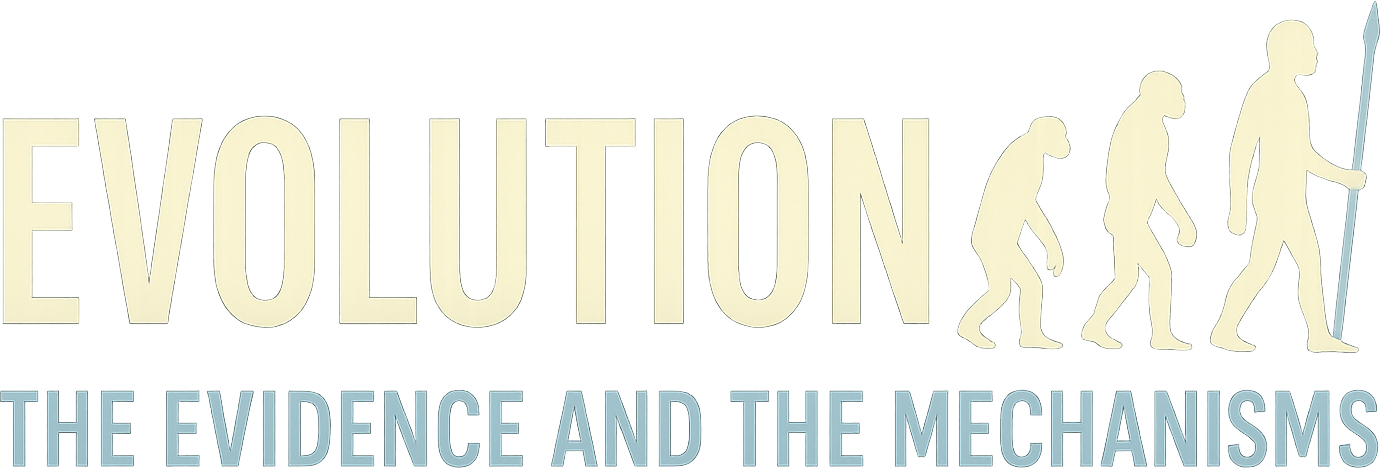
Evolution: The Evidence and the Mechanisms is a Biology course that explains how evolution works, what evidence supports it, and why it is central to modern biology. Students will build a clear, evidence-based understanding of evolutionary thinking, from Darwin and Wallace to DNA, fossils, natural selection, and real-time evolutionary change.
Explore The Evidence And Mechanisms Of Evolution In Biology
- Learn how evolution functions as a scientific explanation supported by multiple lines of evidence.
- Connect fossils, anatomy, embryology, biogeography, and molecular Biology into one coherent framework.
- Understand the mechanisms that drive evolutionary change, including mutation, selection, drift, gene flow, and sexual selection.
- Apply evolutionary thinking to speciation, human evolution, disease, resistance, extinction, and modern biological research.
A clear, evidence-based course on how evolution works and why it is central to modern biology.
Evolution: The Evidence and the Mechanisms guides students through the foundations, evidence, mechanisms, and applications of evolutionary Biology. The course begins with the history of evolutionary thought, including fixed species, deep time, early scientific clues, Darwin and Wallace, descent with modification, population variation, and heredity.
Students then examine the major evidence for evolution, including transitional fossils, comparative anatomy, vestigial traits, embryological patterns, biogeography, DNA, proteins, and evolutionary trees. Each topic shows how independent evidence from across Biology supports the same powerful explanation for the diversity and relatedness of life.
The course also explains the mechanisms that produce evolutionary change. Students will study mutation and recombination as sources of variation, natural selection as a process that shapes adaptation, genetic drift and founder effects, gene flow, population structure, sexual selection, and reproductive success.
By the end of the course, students will be able to explain how lineages split, how macroevolution and extinction shape life over time, how human evolution is studied through evidence, and how evolution can be observed today in resistance, disease, and rapid biological change. After completing this Biology course, students will think more scientifically about life’s diversity and understand why evolution is one of the central organizing ideas in modern Biology.
Full lesson breakdown
Lessons are organized by topic area and each includes descriptive copy for search visibility and student clarity.
Foundations of Evolutionary Thinking
4 lessons
Evidence for Evolution
6 lessons
Mechanisms of Evolutionary Change
5 lessons
Patterns and Applications
5 lessons
Take this course at your own pace
Create a free account, then purchase this course for $9.95. Your account keeps access and progress in one place.
Create Account, then Purchase
Professor Elizabeth Evans
Professor Elizabeth Evans guides this AI-built Virversity course with a clear, practical teaching style.